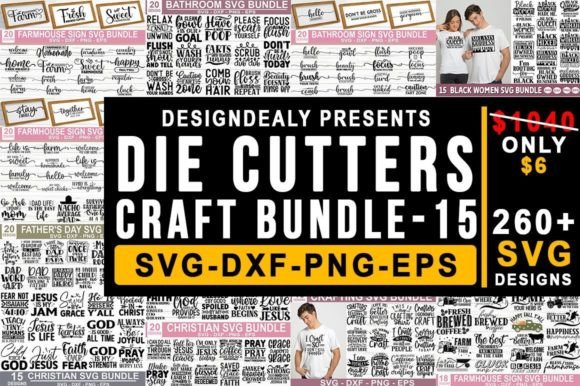
The Die Cutters Craft Bundle – A Designer's Review
When I first opened The Die Cutters Craft Bundle, I was immediately struck by its clean, graphic sensibility. This is not a delicate, highly detailed embroidery set. It feels bold, intentional, and built for projects that need to read clearly from across a room. The shapes carry a cut-paper quality, which means they translate beautifully into applique design and satin stitch work. As someone who regularly tests machine embroidery design files for real shop use, my first thought was: this bundle belongs on products that need to make a statement without fuss.
The mood is modern yet approachable. It avoids the overly ornate or the overly minimalist. Instead, it sits in a sweet spot where a handmade product feels both professional and personal. The theme is versatile enough for custom apparel, home decor, and gift items. I could see this working seamlessly for an Etsy seller who wants consistent branding across embroidered patch sets, tote bag design projects, and even digital product previews. The visual personality is confident without being loud, which is a hard balance to strike in commercial embroidery.
Testing the Bundle on a Real Custom Tote Bag
I decided to run a practical test. I pulled a blank canvas tote, hooped it up with medium-weight cutaway stabilizer, and loaded one of the die-cut style motifs from the bundle. My goal was to see how the design held up on a product that would actually be carried around, stuffed with groceries, and washed occasionally. I used a contrasting thread color to emphasize the cut-out illusion, and I kept the stitch density moderate to avoid puckering on the canvas weave.
The result was clean. The satin stitches laid flat without gaps, and the open areas read exactly like die-cut paper. The fill stitch sections had a smooth, even texture that felt substantial to the touch. I tested it in both a light thread on dark fabric and a dark thread on natural linen. Both versions held their clarity. The design did not distort or pull the fabric unevenly, which is a sign of well-calibrated digitizing. I would confidently sell this finished product at a craft fair or in my Etsy shop without worrying about returns due to poor stitching.
For a small business owner or handmade shop owner, this bundle offers real efficiency. You can produce multiple units quickly because the stitch count is reasonable and the hoop size required is not excessive. That matters when you are running a batch of personalized gift orders for the holiday season.
How the Bundle Performs Across Different Products
The Die Cutters Craft Bundle does not lock you into one product category. I tested it on several surfaces to understand its range, and here is what I found:
- Sweatshirt embroidery: The design sat well on mid-weight fleece. I used a tear-away stabilizer with a light topper, and the satin stitch edges remained crisp. The cut-out effect stood out nicely against the soft background.
- Baby embroidery: On a cotton onesie, the design was soft enough to not irritate the skin. I reduced the stitch density slightly by using a smaller size, and it still retained its visual punch. This would work well for baby embroidery projects like bibs, blankets, or nursery decor.
- Holiday embroidery: The die-cut style lends itself to seasonal gifts. I stitched a version on a kitchen towel for a holiday hostess gift, and it looked sharp enough to pair with a nice ribbon and tag. The clean lines make it easy to coordinate with other design assets.
- Patch projects: I also ran a test on felt for an embroidered patch. The design trimmed cleanly around the edges, and the satin stitch border held up without fraying. This is a strong option for sellers who offer patch sets or boutique branding items.
For apparel decorators and creative entrepreneurs, this bundle reduces the guesswork. You do not need to spend extra time adjusting underlay or testing multiple stabilizer combinations to get a clean result.
Where to Use This Design Carefully
No embroidery file is perfect for every situation, and The Die Cutters Craft Bundle is no exception. I want to point out a few scenarios where you should adjust your approach or test first:
- Small hoop sizes: If you are working with a mini hoop or a very small garment area, the die-cut details may become too tight. I recommend checking the design at the intended size on scrap fabric before committing to a final product.
- Textured fabrics: Terry cloth, fleece, or heavy knits can blur the cut-out effect. Use a firm stabilizer and consider a water-soluble topper to keep the stitches visible.
- Stretchy fabric: On jersey or ribbed knits, the design may pull or pucker if the stabilizer is not robust. A medium cutaway stabilizer with increased underlay coverage helps maintain shape.
- Dark fabric: The die-cut illusion relies on contrast. On very dark fabric, test with a lighter thread color or use a white underlay to keep the design readable.
- Curved surfaces like caps: The design is not overly dense, which helps it conform to a cap curve. However, I would test a small version first to see how the satin stitches behave on the front panel.
- Products that need frequent washing: The satin stitch edges are durable, but I recommend using a good quality thread and a dense underlay for items that will see heavy use and repeated laundering.
Taking a few minutes to test these variables can save you from producing a batch of handmade products that do not meet your quality standards.
Visual Appeal, Customer Trust, and Brand Consistency
In my experience, customers respond to embroidery that looks deliberate. The Die Cutters Craft Bundle has a polished, finished look that signals quality. When a buyer sees a clean die-cut style design on a sweatshirt embroidery or a tote bag design, they perceive the item as well-made and worth the price. That matters for small shop merchandise and craft business growth.
The design also supports brand consistency. If you are an Etsy seller or a digital product seller who offers both physical handmade products and printable mockup previews, the same motif can appear across your shop. It creates a cohesive visual identity that helps customers recognize your work. I have used similar bundles to create matching sets of personalized gifts, aprons, and pillow covers, and the repeatability saves time during production.
The gift appeal is strong. Because the die-cut style feels modern and slightly nostalgic at the same time, it works for a wide age range. I stitched a version on a baby blanket for a friend, and she commented that it looked like something she would find in a boutique. That kind of reaction builds customer trust and encourages repeat business.
Practical Designer Notes Before You Stitch
Before you load this embroidery file into your machine and run a full production batch, I recommend a few simple checks:
- Test on scrap fabric first. This is the single most important step. Use the same fabric type you plan to use for your final product.
- Check thread color contrast. The die-cut effect depends on the background fabric showing through the open areas. If the thread is too close to the fabric color, the illusion will be lost.
- Review stitch density. Look at the design in your software and check whether any areas are overly dense. If they are, consider reducing the size slightly or using a lighter underlay.
- Confirm hoop size. Make sure the design fits comfortably within your hoop with room for the fabric to move. Avoid cramming it right to the edge.
- Inspect small details. Zoom in on any narrow points or sharp corners. If they seem too fine for your fabric, test a larger size or simplify the shape.
- Test in black and white mockups. This helps you see contrast and balance without the distraction of color. It also helps you plan printable mockup images for your shop.
- Compare light and dark fabric backgrounds. A design that looks perfect on white cotton may struggle on black poly. Run a side-by-side test before you list the product.
- Use proper stabilizer. For most applications, a medium cutaway stabilizer is a safe starting point. For stretchy or delicate fabrics, adjust accordingly.
- Check licensing before selling. Whether you plan to sell finished products or digital embroidery file copies, confirm the usage rights for The Die Cutters Craft Bundle. I always advise reading the license terms carefully, especially if you are a commercial embroidery business or a digital product seller.
Taking these steps ensures that your embroidery project comes out looking professional and that your customers receive a product they will love.
Final Thoughts on This Bundle for Real Projects
The Die Cutters Craft Bundle is a practical, well-designed set of motifs that translates easily into real machine embroidery design work. It suits a wide range of handmade products, from custom apparel to home decor to personalized gifts. The die-cut style gives your work a distinctive look that customers notice, and the stitch quality holds up under regular use.
For anyone running a craft business, selling on Etsy, or producing small shop merchandise, this bundle offers a solid foundation for building a cohesive product line. It saves you time on digitizing and testing, and it gives you a reliable repeatable design that works across multiple product types. I am glad I put it through a real project test, and I can recommend it for anyone looking to add a clean, modern option to their embroidery project library.